
What Is Maximalist Interior Design? (With 10 Inspiring Rooms)
Maximalism gets mistaken for clutter constantly — and the two really do look similar from a distance. The difference isn’t how much is in the room. It’s whether the eye has somewhere to land before it starts wandering. Here’s what maximalism actually is, where it came from, and how to do it without it turning into noise.
What Maximalism Really Is
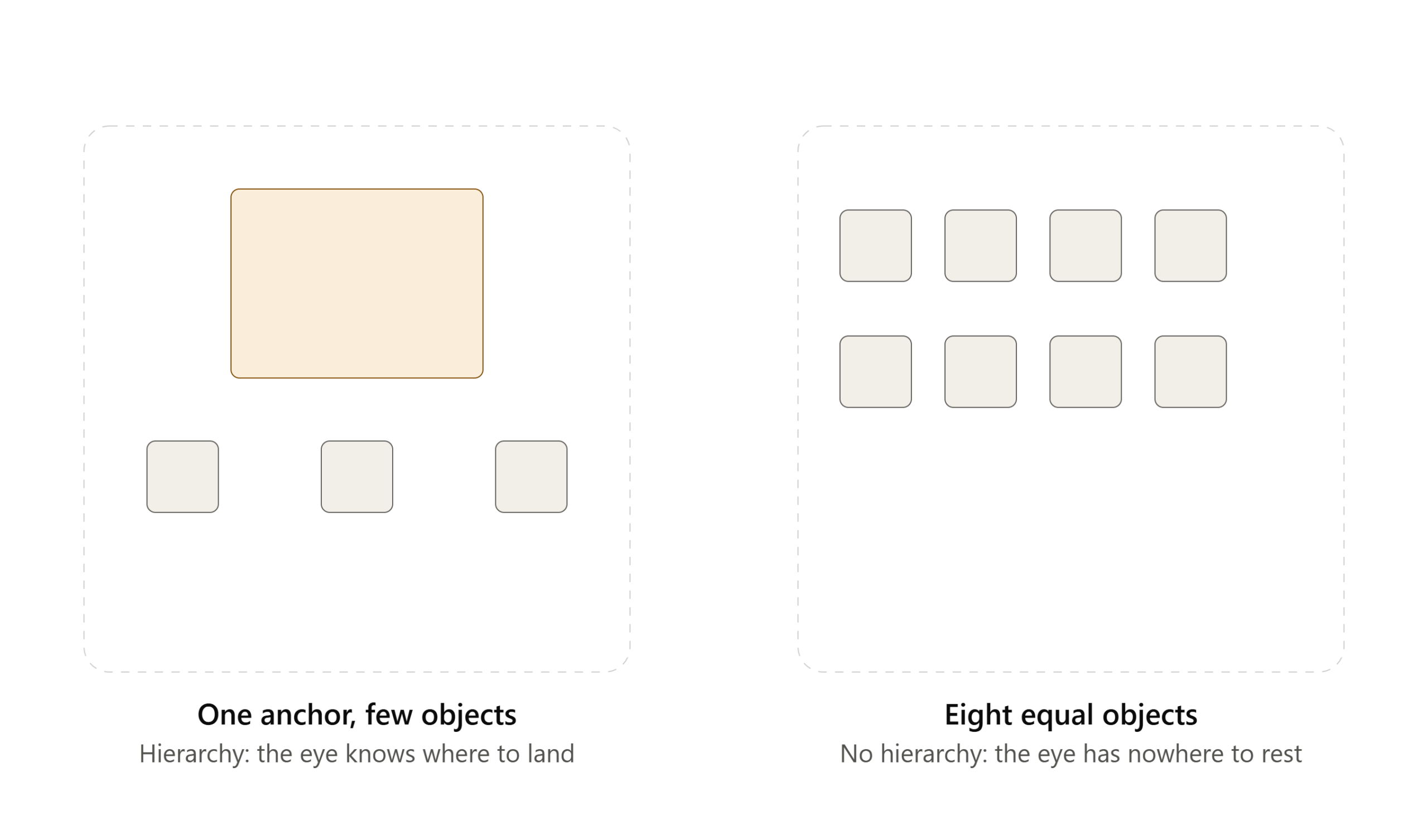
Maximalism is a style built on layered color, pattern, and collected objects — but the thing that actually makes it work is hierarchy, not volume. A maximalist room can hold twice as much as a minimalist one and still feel calm, because every object in it has a rank: something is clearly the focal point, a second tier of pieces supports it, and everything else fills in around the edges. Clutter is what happens when that ranking disappears and everything competes for attention at once. Maximalism, done well, is closer to a well-edited gallery wall than a storage unit — it just has a much larger vocabulary of color and texture than most styles are willing to use.
A Short History
Maximalism isn’t one invented look — it’s a thread that runs through several distinct movements, each arriving at abundance for different reasons.
Hollywood Regency
Old Hollywood glamour translated into interiors: lacquered surfaces, mirrored furniture, bold color paired with metallics. The abundance here is about theatricality — rooms built to photograph well and feel like a set.
English Country
Generations of collected furniture, chintz, and family heirlooms layered together over time rather than all at once. The abundance here reads as inherited, not designed — which is part of why it feels warm instead of showy.
Memphis Group
An intentional rebellion against minimalist modernism — clashing colors, exaggerated geometric shapes, and playful pattern used almost like a manifesto. Memphis proved that “too much” could be a design philosophy rather than a mistake.
The modern maximalist revival
A reaction to a decade of minimalist, all-neutral interiors — a return to color, pattern, and personality as a rejection of rooms that felt more like showrooms than homes.
Common Misconceptions
“Maximalism means no rules”
The opposite is true — maximalism has more moving parts than minimalism, which means it needs more discipline to hold together, not less. A minimalist room can survive one wrong decision. A maximalist room can’t absorb more than a couple before it tips into visual chaos.
“More is always better”
Volume isn’t the goal — density with hierarchy is. A room can have fewer objects than a minimalist space and still read as maximalist if the color and pattern are doing enough work, or it can be genuinely full and still feel calm if the hierarchy is clear.
“It has to be colorful”
Color is common, but texture and pattern can carry a maximalist room on their own. A monochrome room layered in different textiles, finishes, and pattern scales can feel just as abundant as a brightly colored one.
“It’s the opposite of minimalism”
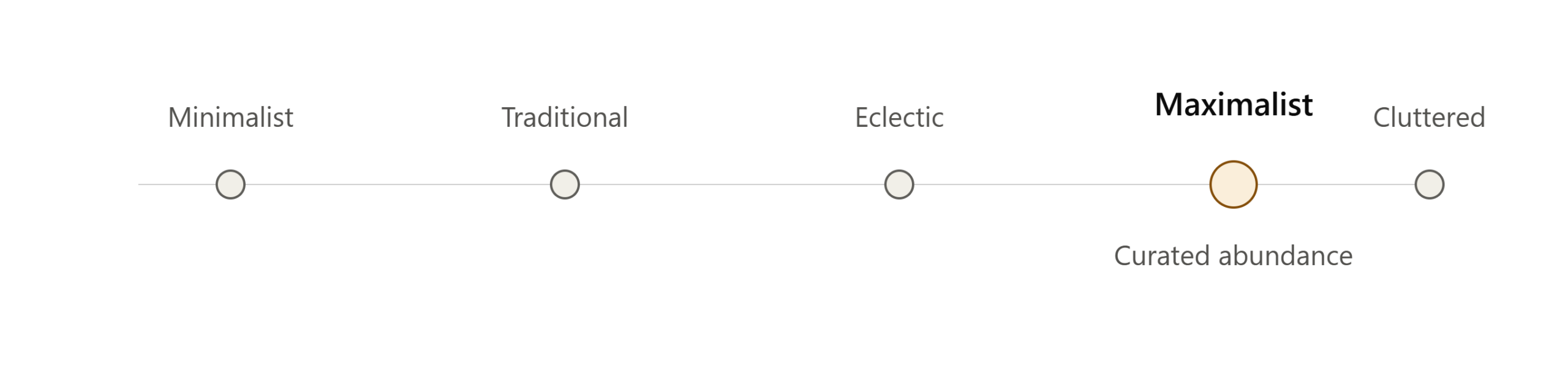
They’re not opposites so much as different answers to the same question — how much visual information does a room need to feel finished. Minimalism answers with restraint. Maximalism answers with curated abundance. Both can be done well or badly.
Color Palettes
Maximalist color doesn’t mean random color — it means a wider palette than most styles allow, still built around a repeating anchor. A common approach: pick two or three saturated colors that will repeat throughout the room in different objects (a jewel-tone velvet sofa, a patterned rug echoing the same green, brass fixtures tying warm metals together), then let a wider range of secondary colors show up in smaller doses — art, books, ceramics, textiles. The repetition is what keeps a wide palette from reading as random. Without it, even beautiful individual colors compete instead of cooperating.
Furniture
Maximalist furniture tends to mix eras and origins more freely than other styles, but it still needs a scale strategy to avoid looking like a showroom floor. The most reliable approach is one dominant piece per room — a large statement sofa, an oversized armoire, a bold dining table — that everything else is sized to support rather than compete with. Mixing a Victorian chair with a mid-century credenza works because they’re doing different visual jobs in the room, not because “eclectic mixing” is inherently maximalist. The mix needs a reason, even if that reason is just scale and color working together.
Patterns
Pattern mixing is where maximalism most often goes wrong, and the fix is almost always about scale, not color. Combine patterns at different sizes — a large floral, a mid-size stripe, a small geometric — rather than several patterns at the same visual scale, which is what actually causes the eye to lose its place. A useful rule of thumb: if you can’t tell which pattern is meant to be the star from across the room, the scales are too similar.
Layering
Most advice on maximalism just says “layer your accessories,” which is true but explains nothing. Layering works because the eye still needs hierarchy even in an abundant room — one large painting surrounded by a few smaller objects creates order, because the eye lands on the big piece first and then has a clear, limited set of secondary things to notice next. Twenty objects of equal visual weight create noise, because there’s no landing point at all — the eye keeps searching for the thing it’s supposed to notice first and never finds it. That’s the actual mechanism behind “layering”: it’s not about quantity, it’s about giving every object in the room a rank.
Lighting
Maximalist rooms tend to use more distinct light sources than minimalist ones — a statement chandelier or pendant, table lamps at varying heights, accent lighting on art or shelving — because a single overhead source flattens all that layered color and pattern instead of giving it depth. Multiple light sources at different heights let the eye read the room in layers after dark the same way it does during the day, instead of collapsing everything into one flat wash of light.
Art
Art is usually the fastest way to establish hierarchy in a maximalist room, because a single large piece can do the anchoring work that would otherwise take several coordinated furniture decisions. Gallery walls are a maximalist signature, but they need their own internal hierarchy too — a slightly larger or more central piece the smaller frames are arranged around, rather than a uniform grid of same-size art, which flattens back into the equal-weight problem layering is meant to solve.
Bookshelves
A maximalist bookshelf is arranged, not just filled — books stacked both vertically and horizontally, objects interspersed at varied heights, and empty pockets of space left deliberately so the shelf can breathe. The instinct to fill every inch is exactly what tips a shelf from “collected” into “crowded.” Leaving roughly a fifth of the shelf visually empty gives the eye rest points between the denser sections.
Plants
Plants add a layer maximalism specifically benefits from — organic, irregular shapes that soften all the pattern and hard-edged furniture around them. Varying plant height and leaf scale matters here too, the same way it does with pattern: a single oversized floor plant reads as another anchor point, while several same-size plants at the same height start to compete rather than support the room.
How to Avoid Clutter
Establish one focal point per zone
Every wall or seating area needs a clear “look here first” — without it, every object is competing for the same job.
Repeat 2–3 colors throughout
A wide palette still needs a thread tying it together, or it reads as random rather than curated.
Vary scale deliberately
Mixing large, medium, and small objects is what creates hierarchy — a room full of medium-everything has nowhere for the eye to land.
How to Decorate on a Budget
Maximalism is one of the more forgiving styles for a limited budget, because volume can come from inexpensive, high-personality sources — vintage and secondhand pieces, textiles, art prints, and collected objects — as long as the hierarchy principles above are still respected. A single splurge item (a bold sofa, a striking light fixture) can serve as the anchor the rest of the budget-friendly pieces are arranged around, which is often a more effective use of a limited budget than spreading it evenly across everything in the room.
Maximalism vs. Other Styles
Maximalism vs. Eclectic
| Eclectic | Maximalist |
|---|---|
| Describes mixing styles and eras together | Describes volume and density of color, pattern, and objects |
| Can be sparse or abundant | Is, by definition, abundant |
| The mix itself is the point | The layering and hierarchy is the point |
A room can be eclectic and minimal — a few carefully chosen pieces from different eras — or maximalist and consistently one style throughout. The two overlap often, but they’re answering different questions.
Maximalism vs. Traditional
| Traditional | Maximalist |
|---|---|
| Follows established, symmetrical conventions | Allows asymmetry and unexpected combinations |
| Pattern and color are usually restrained | Pattern and color are the point |
| Furniture typically matches in era and style | Furniture is more freely mixed across eras |
Traditional rooms can be just as layered and detailed as maximalist ones, but they stay within a tighter, more symmetrical rule set. Maximalism borrows traditional’s love of detail and removes most of the constraints around it.
Maximalism vs. Minimalist
| Minimalist | Maximalist |
|---|---|
| Achieves calm through restraint and negative space | Achieves calm through hierarchy within abundance |
| Fewer objects, each doing more visual work | More objects, ranked so the eye still has a clear path |
| Risk: feels cold or unfinished if overdone | Risk: feels cluttered if hierarchy breaks down |
These two are the ones people treat as true opposites, but they’re solving the same underlying problem — how does the eye know what to look at — with opposite tools. One removes objects until the remaining ones are unmistakable. The other keeps the objects and builds rank between them instead.
Who Should Avoid It
Maximalism asks more of a homeowner than most styles — more decisions, more upkeep, and more tolerance for visual density on a daily basis. It’s usually a poor fit for anyone who finds visual busyness genuinely stressful rather than energizing, anyone renting a space they’ll need to neutralize before moving out, or anyone hoping a style will “take care of itself” once the furniture is in place. Maximalism rewards ongoing curation — swapping pieces, editing the shelf, noticing when something’s tipped from abundant to crowded — more than a one-time furnishing decision does.
10 Room Examples
Ten rooms, each leaning on a different piece of the framework above — color, pattern scale, layering, or a single anchor object doing the hierarchy work.
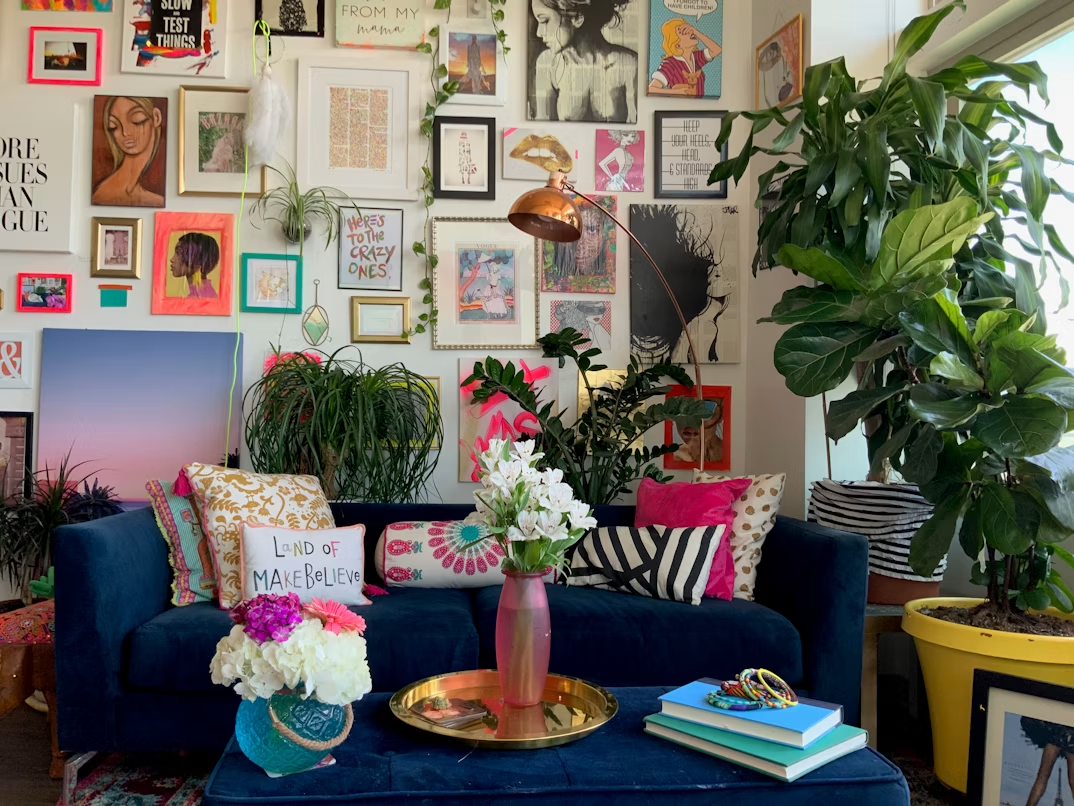
Create a Gallery Wall That Tells a Story
Maximalism embraces abundance, but not randomness. A tightly layered gallery wall of different sizes, frames, and subjects creates personality while becoming the room’s visual centerpiece.
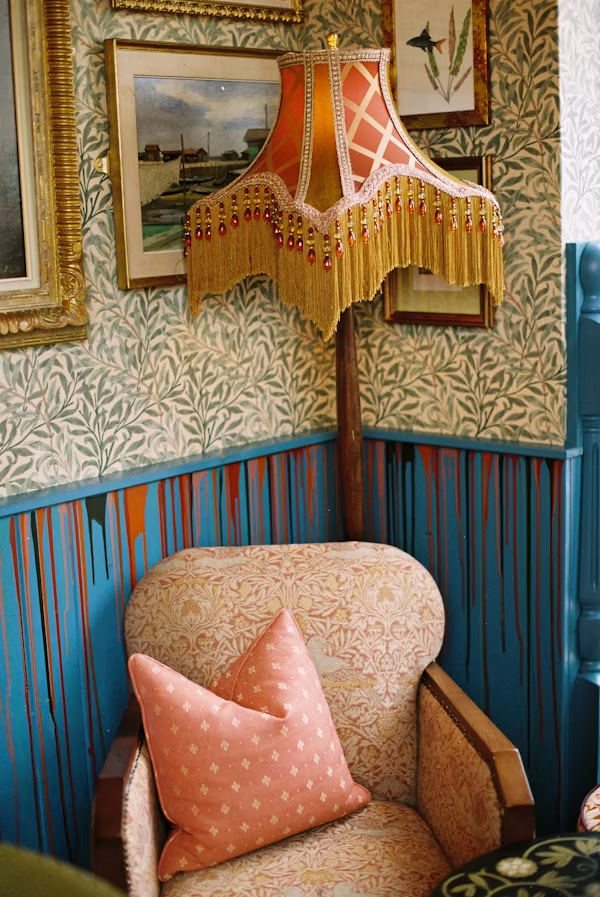
Mix Patterns Without Losing Cohesion
Wallpaper, artwork, upholstery, and a beaded lampshade all compete for attention, yet a restrained palette of warm greens, pinks, and wood tones keeps the room feeling intentional rather than chaotic.
Use Bold Color as a Backdrop
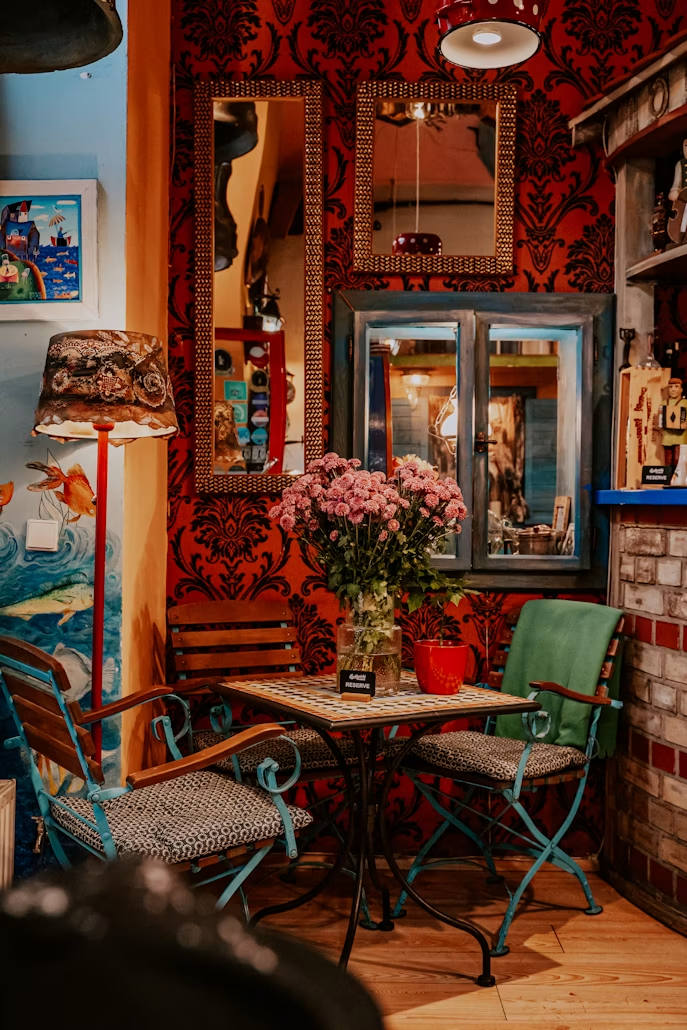
Dramatic wallpaper transforms a small corner into an experience. In maximalist interiors, richly patterned walls become an active design element rather than a neutral background.
Layer Textiles for Warmth
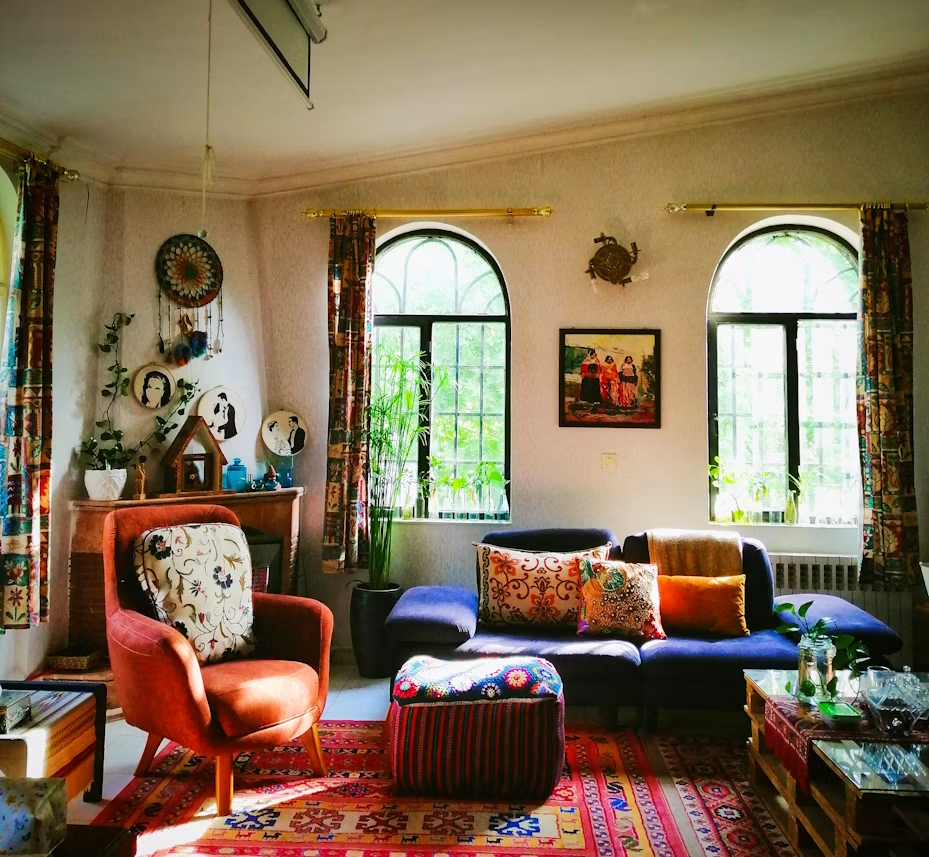
Rugs, embroidered pillows, patterned draperies, and collected artwork build visual richness without overwhelming the architecture. Texture is just as important as color in maximalist design.
Color-blocked dining nook
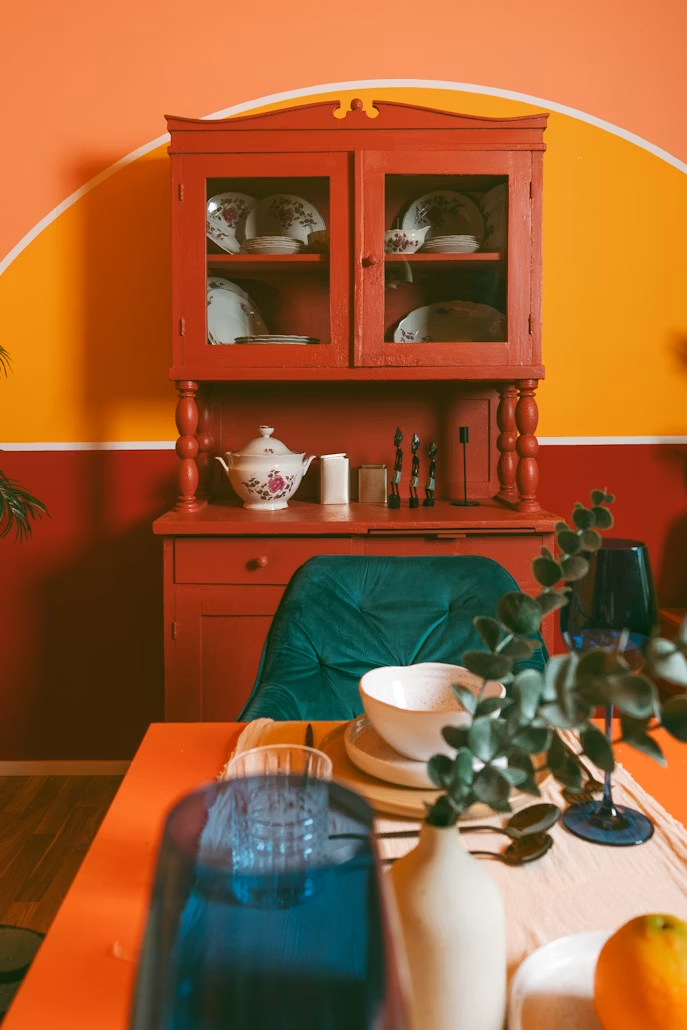
Painting both the wall and an antique cabinet in saturated shades creates a sculptural focal point. Maximalism often gives traditional furniture new life through fearless color.
Celebrate Decorative Fabric
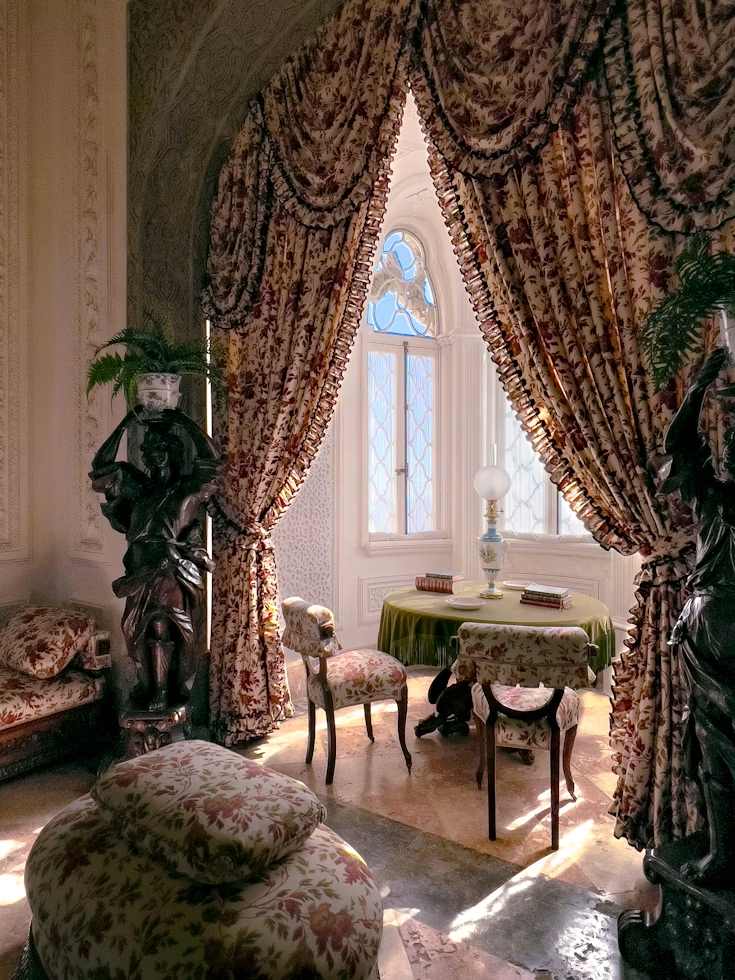
Generous swags, floral textiles, and upholstered furniture create a room where fabric becomes architecture. Maximalism favors luxurious layers.
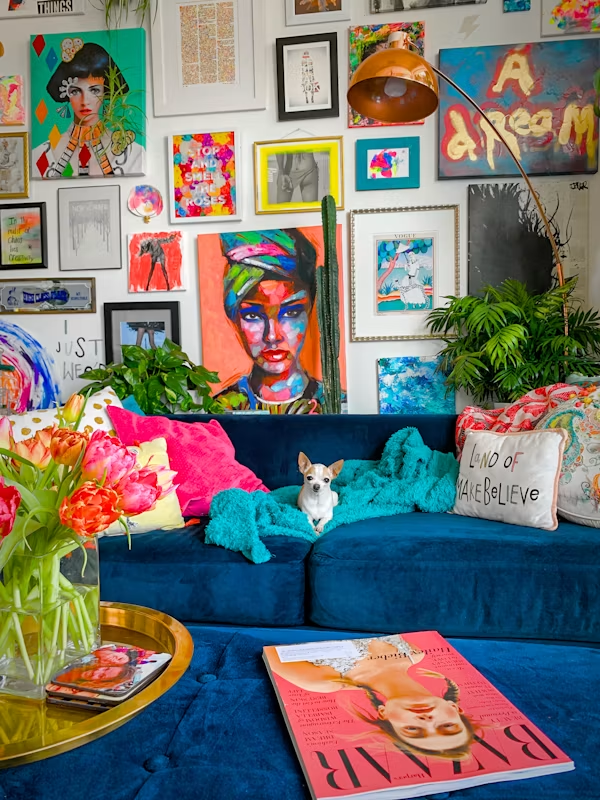
Let Art Become the Room
Oversized contemporary artwork, saturated upholstery, and a salon-style gallery wall show that maximalism isn’t tied to one period. Modern art can be every bit as maximal as antiques.
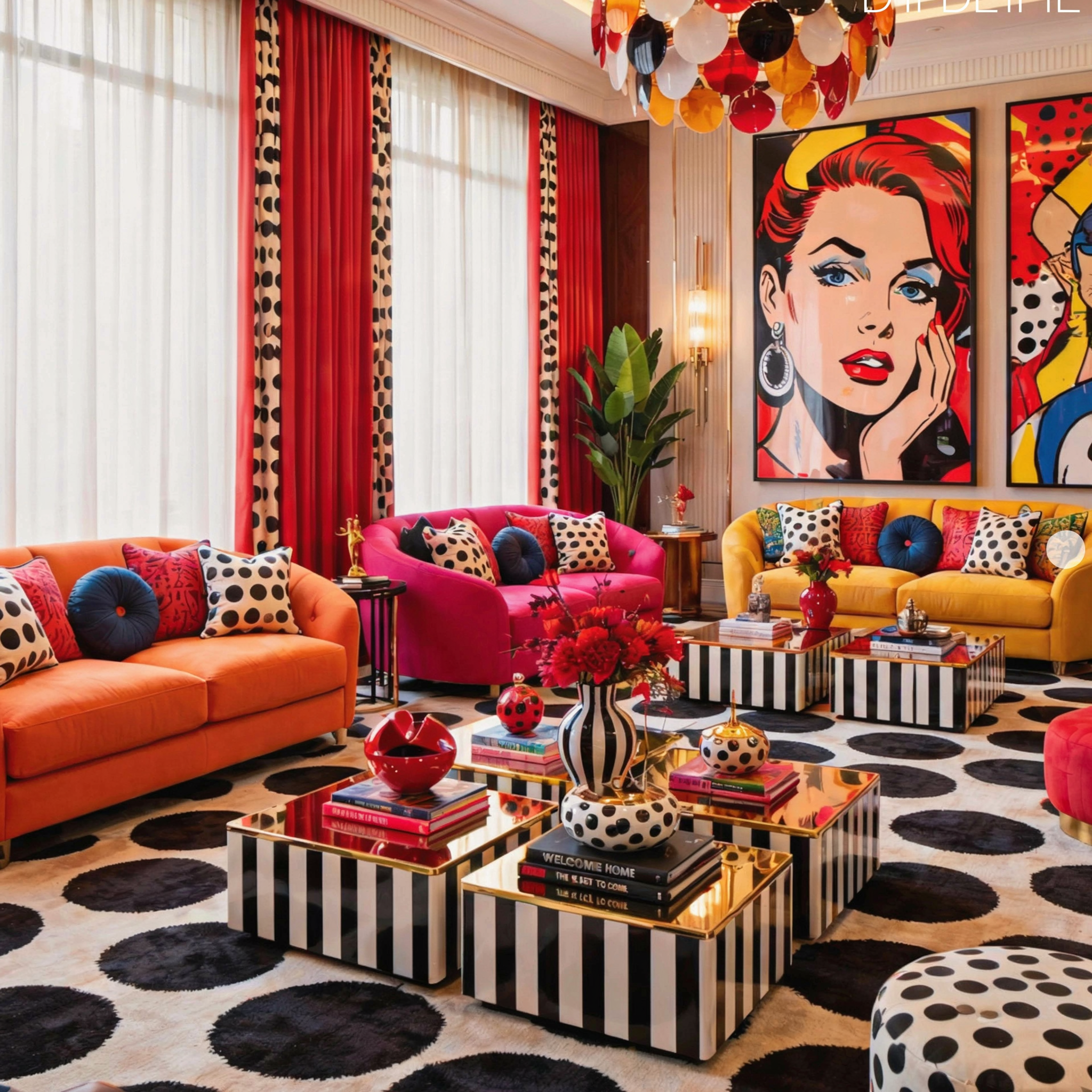
Repeat Colors and Patterns
Polka dots, stripes, graphic art, and vivid upholstery work together because colors repeat throughout the room. Successful maximalism relies on recurring motifs, not unlimited variety.
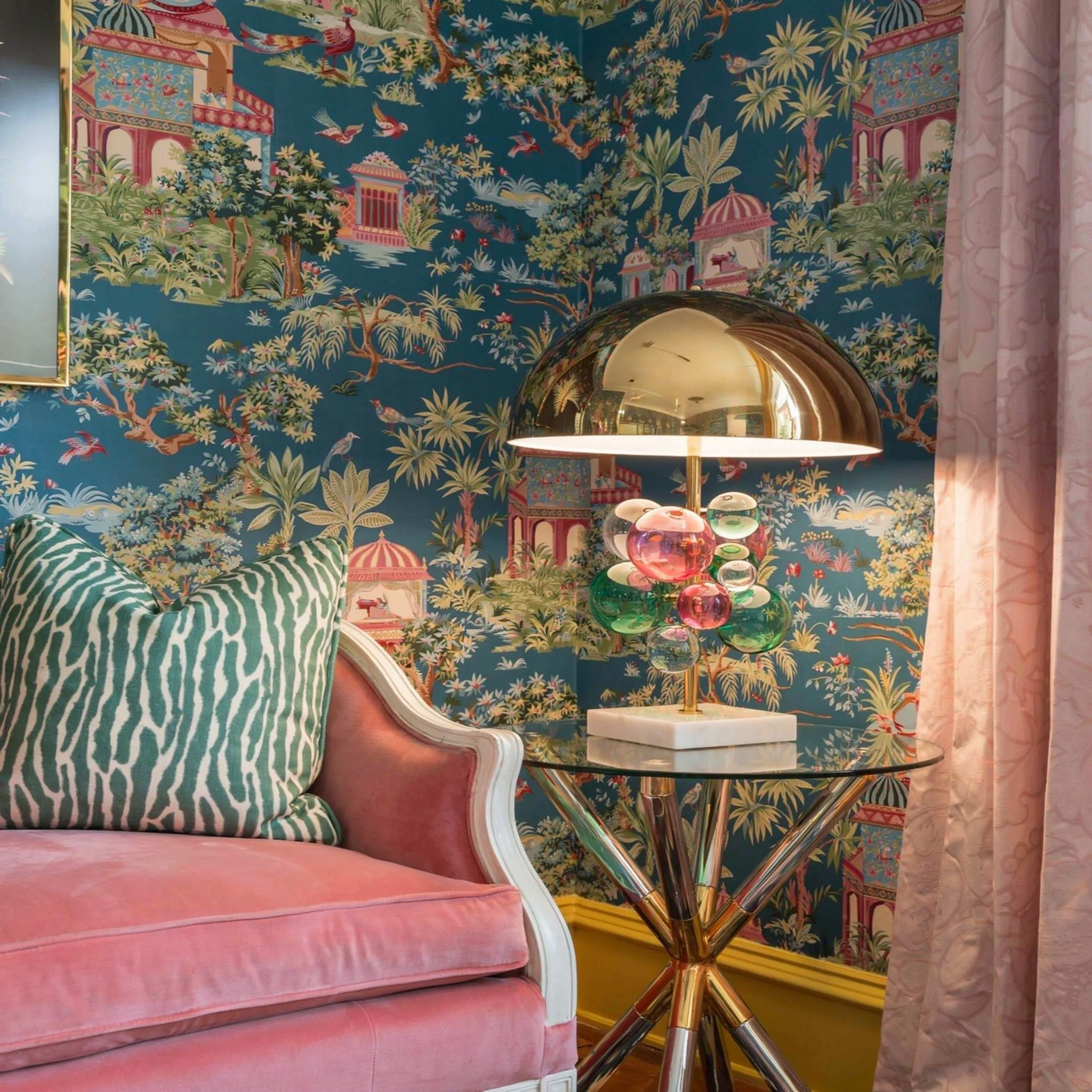
Treat Wallpaper as Fine Art
Scenic wallpaper creates an immersive backdrop while sculptural lighting and colorful accessories add depth. In maximalist rooms, walls often become the largest decorative canvas.
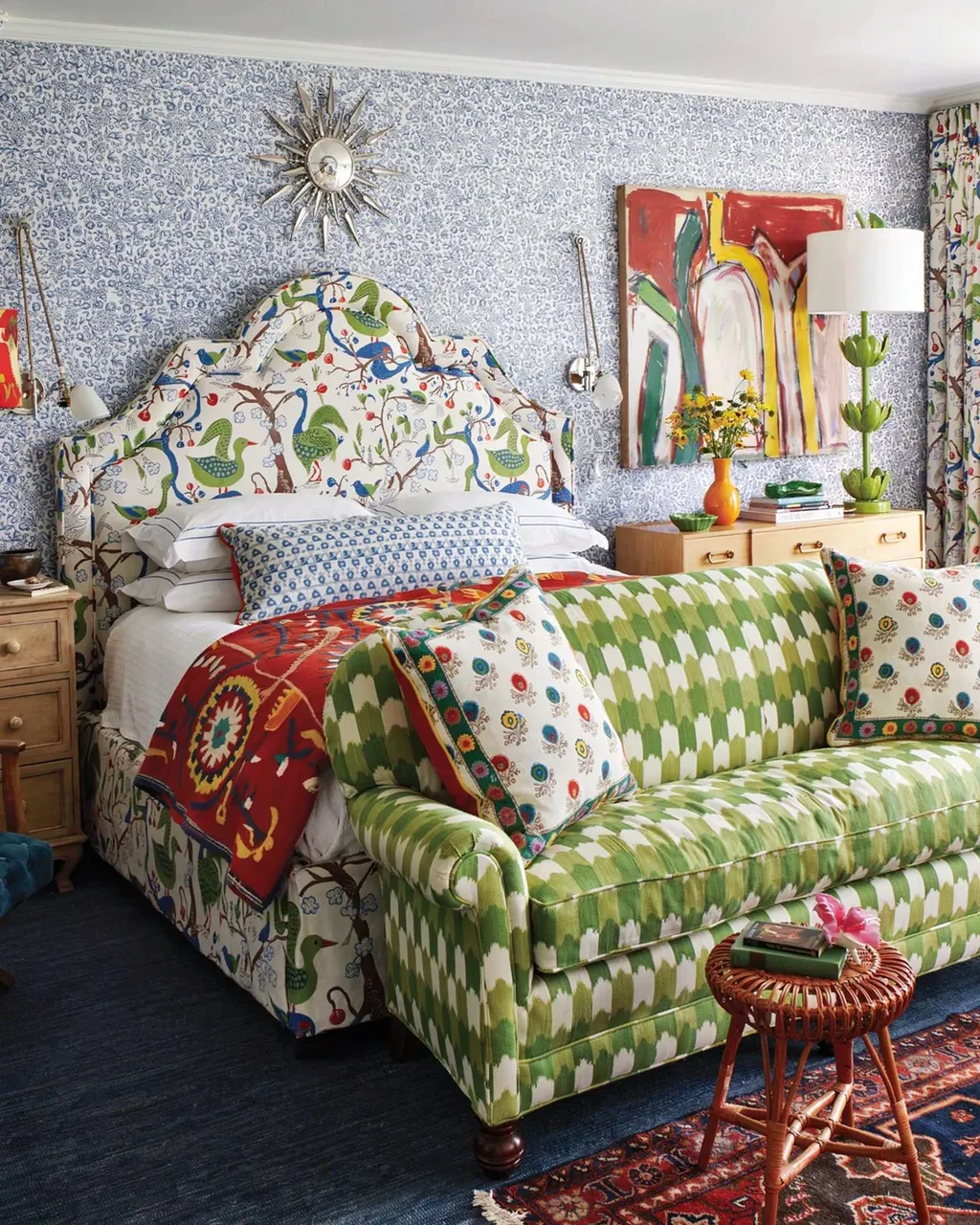
Layer Pattern on Pattern
Wallpaper, upholstered headboard, sofa fabric, bedding, artwork, and rugs all feature different patterns. The room succeeds because the colors relate, even when the prints don’t match.
Love Maximalism But Don’t Know Where to Start?
Take the chinoiserie reading nook above — the teal wallpaper, the blush chair, the brass bubble lamp. It looks effortless, but every layer in it — the anchor piece, the pattern scale, the color repeat, the lighting — was a separate decision that had to be made in the right order to avoid tipping into clutter. That’s the part that’s genuinely hard to do alone: not picking pieces you like, but knowing which one gets to be the anchor and which ones have to stay quiet in support of it.
true builds that hierarchy for you — starting with your actual room, not a generic template — so you get the abundance of maximalism without the trial-and-error of buying pieces that end up competing with each other. One room, a real layout plan, and a shopping list sized to your budget.
Start your room — $95Frequently Asked Questions
What is maximalist interior design?
Maximalist interior design is a style built on layered color, pattern, and collected objects, organized around a clear visual hierarchy rather than an even spread of stuff. Done well, it looks abundant but intentional, not cluttered.
Is maximalism the same as eclectic style?
No. Eclectic describes mixing styles and eras together; maximalism describes a volume and density of pattern, color, and objects. A room can be eclectic and minimal, or maximalist and consistently one style.
How do you keep a maximalist room from looking cluttered?
Establish one dominant focal point per wall or zone, repeat 2–3 colors throughout the room to unify the mix, and vary the scale of objects so the eye has a clear place to land before wandering to the rest.